











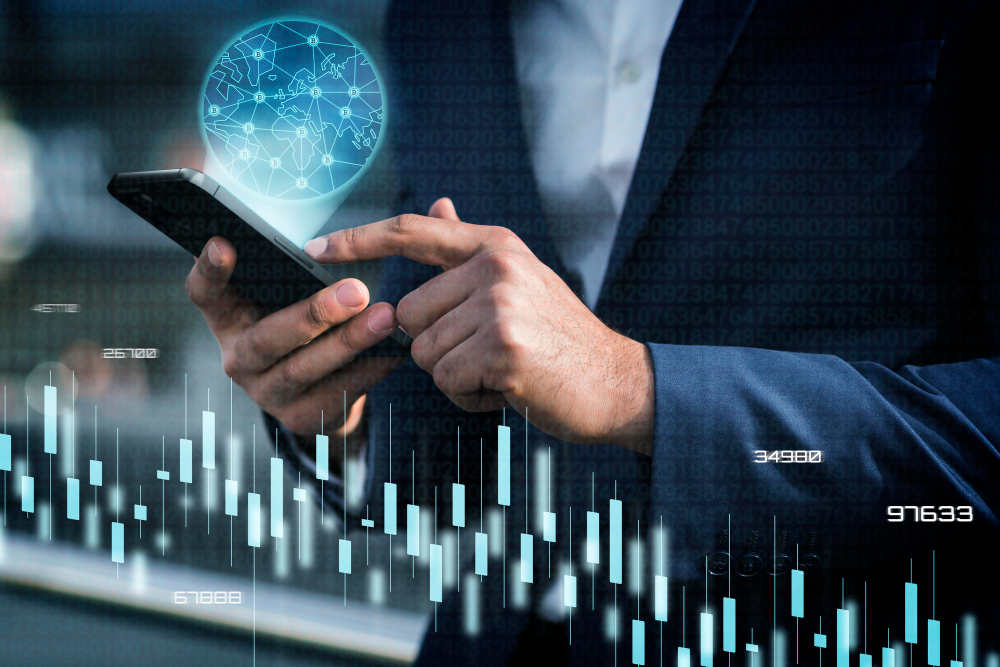
There was a time when markets moved at the pace of people. News had to be read, interpreted, and debated. Orders were placed after discussion, sometimes after hesitation. Even in moments of stress, there was a human rhythm to making decisions; a pause between information and action.
That pause is disappearing.
AI has introduced a new tempo to financial markets. Decisions are now triggered by signals rather than reflection, and reactions happen within milliseconds. Price moves can begin before a human has fully processed what just happened. The shift is behavioral, and markets are operating on a different clock.
Markets Now React Before the Story is Fully Told
One of the clearest changes in recent years is how quickly markets respond to new information. A single headline, a policy remark, or a sudden disruption in supply can move prices almost instantly.
This speed is not driven by emotion or speculation. It is driven by systems designed to recognize patterns and act the moment conditions are met. These systems now respond to probability. The result is a market that often moves ahead of the narrative. By the time analysts explain what happened, the adjustment has already taken place.
Where Artificial Intelligence is Already Showing its Impact
The influence of AI is already visible in the daily mechanics of financial markets, changing how trades are executed, risks are measured, and prices respond to new information.
Some of the most noticeable changes include:
- Faster price reactions to news: Markets now adjust within seconds of major announcements, often before traditional analysis is published.
- More synchronized market moves: When multiple systems respond to the same signals at the same time, price swings can become sharper and more coordinated.
- Shorter market cycles: Trends that once developed gradually can now unfold and reverse within a much tighter timeframe.
- Greater reliance on real-time data: Trading decisions increasingly depend on continuous data feeds rather than periodic reports.
- Changing liquidity patterns: Buy and sell orders can appear and disappear quickly, making market depth more dynamic than in the past.
When taken together, these developments reflect a structural shift in how markets operate.
The Volume of Information Has Outgrown Human Capacity
Financial markets generate enormous amounts of data every second: price updates, trade flows, economic releases, logistics signals, and policy statements. No individual, no matter how experienced, can process all of this in real time.
Artificial intelligence fills that gap.
Instead of focusing on a handful of indicators, modern systems scan thousands of variables simultaneously. They detect relationships that would be invisible in traditional analysis. They recognize early signals of change long before those signals appear in official reports.
This does not mean machines are smarter than people. It means they are faster at sorting noise from signals.
Speed Has Become a Market Force of its Own
Speed is no longer just an advantage, as it has become a defining characteristic of modern markets.
When trading systems react at the same moment, price movements can accelerate quickly. A shift that once unfolded over hours can now occur within minutes. This compression of time changes how risk behaves.
Short periods of stability can quickly turn into sharp market moves. In these moments, even a liquidity provider can struggle to keep pricing smooth and consistent. Price swings may feel more aggressive and sudden, even if the core fundamentals remain unchanged.
What matters is not only what happens, but how fast it happens.
The Role of Human Judgment is Changing
Despite the rise of artificial intelligence, markets are not becoming fully automated. Human judgment still plays a central role, especially in strategy, risk decisions, and long-term positioning.
What has changed is the division of labor.
Machines handle speed and scale, people handle interpretation and direction.
This partnership allows markets to operate more efficiently, but it also introduces new challenges. When automated systems react to the same signals simultaneously, their collective behavior can strengthen market movements. A small shift can become a large one simply because many systems respond at once.
Market Structure is Being Rewritten
The influence of artificial intelligence extends beyond trading floors. It is reshaping how markets are built and how risk spreads through the financial system.
Liquidity, once considered stable, can now change quickly. Price discovery, once gradual, can now occur in bursts. Market cycles, once measured in weeks or months, can now compress into days.
These changes are not always visible in headlines. They appear in the rhythm of price action, faster reactions, shorter recoveries, and sharper reversals.
The Rise of AI Companies
A growing group of technology companies has seen rapid expansion as demand for computing power, automation, and data processing continues to rise across industries.
What stands out in this cycle is the concentration of growth around firms building the infrastructure behind AI. Chip designers, cloud providers, and data-center operators are seeing strong revenue momentum as businesses invest heavily in digital capacity. Companies such as Nvidia, Microsoft, and Alphabet have become central to this shift, not only because of their size but because their products sit at the core of modern AI systems.
A second wave of firms is emerging in areas like robotics, cybersecurity, and enterprise software. These companies are expanding quickly as organizations integrate AI into daily operations, from logistics and finance to customer service and manufacturing.
These developments show that AI rally is not limited to a single company or sector. It reflects a structural change in how businesses operate and how capital is being allocated.
The Real Transformation is Behavior
Artificial intelligence is often described as a technological revolution. In financial markets, it is better understood as a behavioral shift.
Participants are adapting to a world where reaction time matters more than prediction, where access to information is immediate, and where decisions are increasingly shaped by data rather than instinct.
Markets are becoming more responsive, more sensitive, and more interconnected.
The direction of prices will always depend on economic forces, policy decisions, and risk perception. That has not changed. What has changed is the speed at which those forces are translated into movement.
The market is still driven by human decisions. It simply moves faster than humans ever could on their own.