











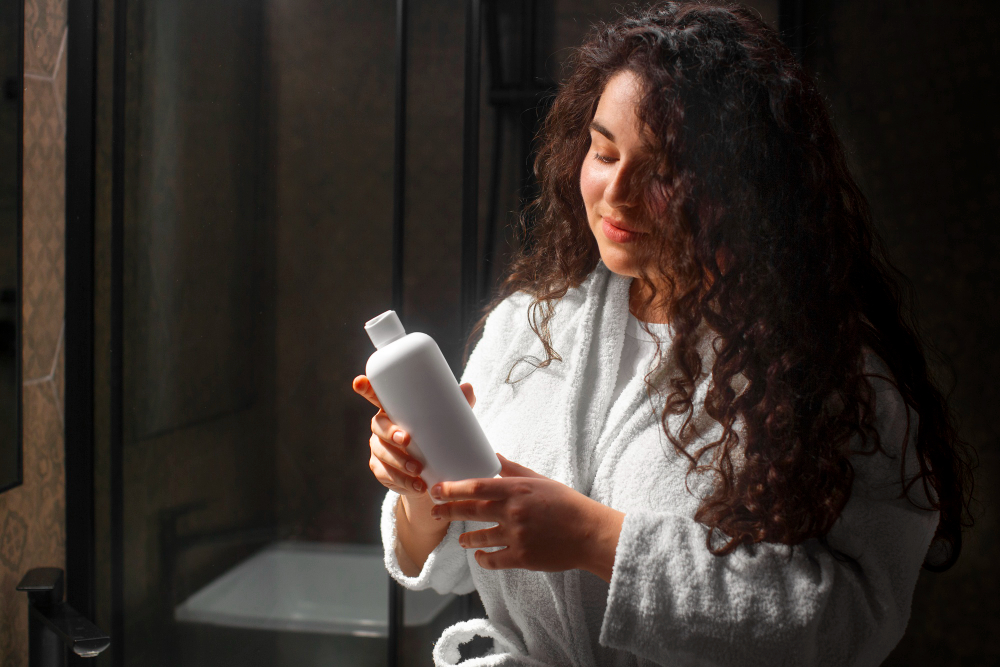
If you’ve ever found yourself standing on the aisle of a pharmacy, staring at labels trying to understand how your hair ends up oily by midday even though you just washed it well, I’ve been there, and so have many other people. But the fact is, they all make the exact same mistakes, and most of them do not know it.
The problem with your hair oiliness is not related to any hygiene issues.Your sebaceous glands are secreting too much sebum. In addition to this, your daily usage of shampoo may be worsening the situation. Now, let’s see what is actually going on
Mistake 1: Washing Every Single Day
Here’s the most surprising one for you: frequent shampooing actually causes your hair to become greasy quickly. When you strip the scalp of its oils, it starts secreting more of it. It’s a feedback loop that your scalp runs without asking your permission.
- Wash two to three times a week instead of daily
- Use a formula designed to regulate sebum, not just blast it away
- Give your scalp time to recalibrate between washes
Most people with oily scalps reach for the most clarifying formula they can find and use it every morning. The scalp reads that as a threat and compensates hard. The right shampoo for oily hair, used less frequently, outperforms a harsh daily wash almost every time.
Mistake 2: Reading the Label Wrong
A typical shampoo bottle starts as a marketing piece before being used as a product description. Terms such as “volumizing,” “refreshing,” and “balancing” seem enticing. But they do not necessarily indicate what the shampoo does to an oily scalp.
What to look for:
- Salicylic acid regulates sebum production at the follicle level
- Zinc pyrithione controls scalp microbiome imbalances that worsen oiliness
- Tea tree oil natural astringent with mild antimicrobial properties
- Controlled-concentration surfactants that lift oil without destroying the moisture balance
What to avoid:
- Silicones listed high on the ingredient deck (dimethicone, cyclopentasiloxane)
- Heavy conditioning agents built into the main formula
- Anything labeled “moisturizing” or “hydrating” at the root those are dry-scalp ingredients
Mistake 3: Shopping for Hair Type Instead of Scalp Type
This is the biggest disconnect I see. People think about their hair fine, thick, curly, color-treated and shop from that frame entirely. But the real variable is your scalp. You can have fine hair with an oily scalp. You can have thick, dry ends and a grease-producing root zone.
- Target the scalp environment, not the strand texture
- Look for lightweight formulas that don’t deposit conditioning residue at the crown
- Handle dry ends separately with a conditioner applied mid-shaft to tips only
A good shampoo for oily hair solves the scalp problem. Let your conditioner handle everything below that.
Mistake 4: Skipping Conditioner Entirely
A lot of people with oily roots skip conditioner altogether, afraid of adding more weight. This logic certainly makes sense. However, in the case where your ends are dry, and your scalp compensates for this with too much oil, you find yourself with both problems at once: oily roots and dry ends.
- Use a lightweight, rinse-out conditioner
- Apply from mid-shaft down only never at the scalp
- This one adjustment, paired with the right shampoo for oily hair, makes a noticeable difference within a week
Mistake 5: Poor Application Technique
Even the best shampoo for oily hair underperforms if you’re rushing through the process. A quick pile-and-scrub doesn’t actually reach the scalp thoroughly.
- Work lather in with your fingertips, not your nails, in slow circular motions
- Cover every section of the scalp not just the top
- Give it a minimum of ninety seconds of active massage before rinsing
- Rinse with cool or lukewarm water hot water stimulates sebaceous glands and accelerates the afternoon grease
Conclusion
A good formula of a shampoo for greasy hair would have a subtle astringent effect during cleansing, but not a harsh one. Your scalp should feel refreshed without being stripped and dry after washing.
A few benchmarks when evaluating a formula:
- Transparent ingredient lists with actives you can identify
- No heavy fragrance load masking a weak formulation
- Light lather, not dense foam volume is a surfactant trick, not a cleansing signal
- No silicone coating that builds up over repeated washes
The right shampoo for oily hair works with your scalp’s biology. It removes excess sebum without triggering the overproduction cycle. That’s the whole job and when you get it right, the noon grease problem mostly takes care of itself.