











Paternity testing has grown increasingly accessible and widely used in recent years. It is not only a scientific tool but also an emotional and legal aid, offering clarity in situations involving family disputes, medical needs, or personal peace of mind.
Knowing when and how to take a paternity test, and understanding its safety, is essential for making informed decisions.
This guide explores all aspects of paternity testing, including timing, procedure types, accuracy, safety, legal implications, emotional considerations, costs, and frequently asked questions, providing a full picture for readers seeking answers.
What Is a Paternity Test?

A paternity test is a scientific method used to determine whether a specific man is the biological father of a child.
It relies on the principle that children inherit DNA equally from both parents, allowing genetic markers to be compared for confirmation.
Paternity tests have evolved with technology to become highly accurate, minimally invasive, and accessible, with options for legal or personal use.
They are used in diverse situations, from custody disputes to medical planning. Understanding what a paternity test involves is the first step toward making an informed choice.
Modern tests are not only for determining biological relationships but also serve as proof in legal disputes, can influence medical decisions, and sometimes even impact inheritance and social benefits.
Today, the process is straightforward, quick, and can often be done without leaving home for preliminary testing.
How Does a Paternity Test Work?
DNA testing for paternity works by analyzing the genetic markers of the child and alleged father. The process involves several steps:
- Sample Collection: Typically through a cheek swab, though blood, hair, or other tissues may also be used.
- Laboratory Analysis: The laboratory examines DNA markers and compares them between the child and alleged father.
- Results Interpretation:
- 99.99% probability: Confirms biological paternity.
- 0% probability: Excludes paternity.
Additional Insight: Paternity tests are scientifically reliable and widely accepted in courts, meaning results can be used for child support, custody, and legal recognition of parental rights.
Understanding the steps helps reduce anxiety, especially for first-time parents or individuals entering legal processes.
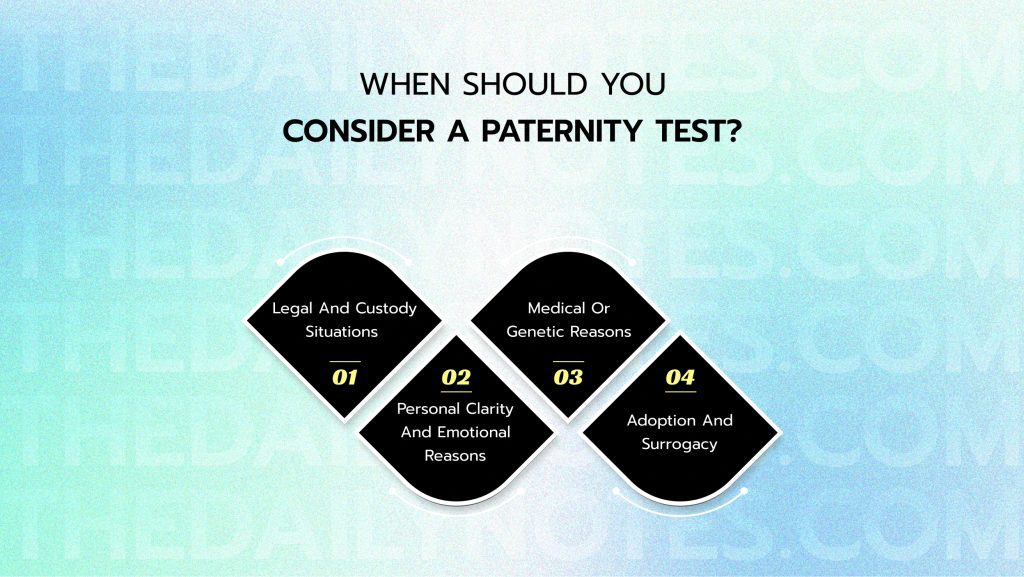
When Should You Consider a Paternity Test?
A paternity test is not always just for curiosity it has legal, medical, and emotional significance. Knowing when it’s appropriate can guide families through sensitive situations.
People may consider a paternity test for a variety of reasons. Some may require official verification for legal purposes, while others may seek it for personal or medical reasons.
In every case, the timing, type of test, and choice of laboratory can influence accuracy, safety, and emotional impact.
1. Legal and Custody Situations
Paternity testing is often necessary for legal purposes:
- Child Support Cases: Courts may require confirmation of paternity to establish financial responsibility for the child.
- Custody Disputes: Judges may require proof of paternity before granting visitation or custody.
- Inheritance and Estate Claims: Confirming biological parentage ensures rightful claims to assets or benefits.
In some legal disputes, establishing paternity early can prevent prolonged court battles. Legal tests follow a strict chain-of-custody process, making them court-admissible.
This means samples are collected, documented, and analyzed under professional supervision to ensure authenticity and integrity.
Example: A father may need to prove paternity to gain visitation rights, while a mother may need verification to secure child support.
2. Personal Clarity and Emotional Reasons
Paternity tests can help resolve uncertainty or doubts, supporting emotional well-being.
- Peace of Mind: Provides clarity and reduces anxiety about family relationships.
- Family Planning: Knowing the biological father may influence future decisions about siblings or extended family planning.
Beyond legal reasons, paternity testing can have profound psychological effects. Some individuals may experience relief and a sense of closure, while others may need support to cope with unexpected results.
Counseling or therapy is often recommended, particularly when the outcome affects family dynamics.
Example: A father unsure about his biological connection might request testing to decide on involvement in a child’s upbringing.
3. Medical or Genetic Reasons
Understanding biological relationships can be vital for healthcare planning:
- Medical History: Knowing the father’s genetic background helps assess hereditary risks.
- Blood Type or Genetic Conflicts: Certain medical scenarios may require paternity confirmation.
- Inherited Disorders: Accurate paternity information guides healthcare providers in monitoring potential inherited conditions.
For children with a family history of genetic diseases like cystic fibrosis, sickle cell anemia, or certain cancers, knowing the father’s DNA can aid in early intervention.
Genetic counseling can also guide families in making informed healthcare choices, including preventive screenings and treatments.
4. Adoption and Surrogacy
Paternity tests are essential in situations involving adoption or surrogacy:
- Legal Adoption: Some adoption cases require proof of biological parentage to finalize parental rights.
- Surrogacy Agreements: Confirming genetic relationships ensures clarity in parental responsibilities.
Even in planned surrogacy, testing can verify the intended parent’s DNA to prevent disputes or confusion.
Adoption agencies may require testing for legal clearance before approving permanent guardianship.
Types of Paternity Tests
There are different types of paternity tests depending on timing, purpose, and methodology, each with its benefits and considerations.
Choosing the right type of test depends on safety, accuracy, legal needs, and emotional readiness.
Understanding these options ensures parents and families make the best decision for their circumstances.
1. Prenatal Paternity Testing
Prenatal testing determines paternity before birth, providing early clarity.
- Non-invasive Prenatal Testing (NIPT): Uses fetal DNA from the mother’s blood. Completely safe for mother and baby.
- Chorionic Villus Sampling (CVS): Involves a small tissue sample from the placenta. Slightly higher risk, usually performed between 10–13 weeks.
- Amniocentesis: Collects amniotic fluid for testing between 15–20 weeks. Also carries a small risk of complications.
Prenatal testing can help prospective parents prepare emotionally, legally, and medically for the child’s arrival.
Non-invasive testing is increasingly preferred because it eliminates the risk associated with invasive procedures, making it safer for routine checks.
2. Postnatal Paternity Testing
Postnatal tests confirm paternity after birth and are simple, safe, and accurate.
- Cheek Swab: The most common method, painless and convenient.
- Blood Sample: Used in some hospitals or legal cases.
- Other Samples: Hair follicles or tissue may be used if swabs aren’t available.
Postnatal tests are suitable for parents seeking either personal clarity or legal validation. They are also suitable for older children and provide quick, highly accurate results with minimal discomfort.
3. Legal vs. Informational Testing
- Legal Paternity Test: Conducted under strict procedures with chain-of-custody, making results admissible in court.
- Informational or At-Home Test: Provides private results for personal knowledge, but may not be legally valid.
Choosing between a legal or informational test depends on whether results will affect custody, child support, or inheritance claims.
Informational tests are excellent for personal peace of mind but cannot be used in legal proceedings.
How Safe Is a Paternity Test?
Paternity testing is generally very safe.
- Postnatal tests: Involve cheek swabs or saliva and are painless and risk-free.
- Prenatal tests: Non-invasive tests are safe for mother and baby, while invasive procedures carry minimal risk of miscarriage (<1%).
Safety is a major concern for parents, especially during pregnancy. Choosing non-invasive methods whenever possible eliminates risk while still providing accurate results.
Accuracy of Paternity Tests
Modern DNA testing is extremely reliable:
- Probability of paternity: Typically reported as 99.99% when the alleged father is biologically related.
- Exclusion of paternity: 0% probability confirms the individual is not the biological father.
Factors affecting accuracy:
- Proper sample collection
- Laboratory accreditation
- Rare genetic complications, such as close sibling DNA
Accurate testing requires strict adherence to collection and lab protocols. Using an accredited laboratory ensures results are reliable for legal, medical, and personal purposes.
Steps Involved in Getting a Paternity Test
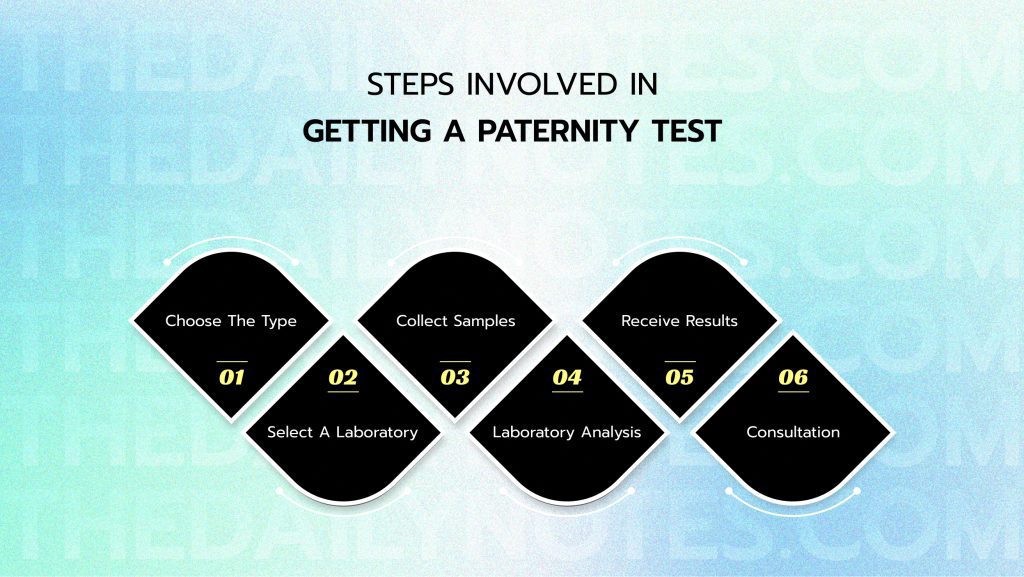
- Choose the Type: Prenatal or postnatal; legal or informational.
- Select a Laboratory: Ensure it is accredited and reputable.
- Collect Samples: Cheek swabs, blood, or other biological materials.
- Laboratory Analysis: DNA markers are compared.
- Receive Results: Usually within 3–10 business days.
- Consultation: Discuss results with your doctor, lawyer, or counselor as needed.
Following these steps ensures accuracy, confidentiality, and proper legal documentation, especially if the results are used for court purposes.
Emotional Considerations
Paternity tests can have significant emotional implications:
- For parents: Results may affect co-parenting and family dynamics.
- For children: Age and maturity may influence how results are communicated.
- Counseling: Pre- and post-test counseling helps manage potential stress or family tension.
Even a confirmed paternity result may trigger unexpected emotional reactions, including relief, anxiety, or guilt. Being prepared and seeking support is critical.
Legal Considerations
Paternity tests have legal significance in:
- Child Support: Determines financial responsibility.
- Custody and Visitation: Establishes parental rights.
- Inheritance and Benefits: Confirms eligibility for assets or government benefits.
Courts only recognize paternity tests that follow strict procedural rules, including chain-of-custody and accredited laboratories. Informational or at-home tests are generally not accepted in legal cases.
Choosing the Right Paternity Test
- Purpose: Personal knowledge, medical reasons, or legal use.
- Timing: Prenatal vs. postnatal.
- Accuracy: Accredited laboratory selection is critical.
- Privacy: Ensure confidentiality throughout the process.
Consulting a doctor, lawyer, or counselor before testing ensures that the right method is selected, minimizing risks and maximizing benefits.
Common Myths About Paternity Tests

- DNA testing is painful: Cheek swabs are painless.
- Prenatal tests are unsafe: Non-invasive methods are completely safe.
- Tests are inaccurate: Modern testing is over 99.99% accurate.
Understanding facts versus myths helps reduce anxiety and promotes informed decisions. Avoid relying on hearsay; always seek professional advice and accredited lab services.
Tips for a Successful Paternity Test
- Use an accredited laboratory.
- Follow collection instructions carefully.
- Decide if a legal chain-of-custody is needed.
- Consider pre-test counseling.
- Discuss results with a professional if needed.
Following these tips ensures accuracy, safety, and emotional preparedness, and helps prevent conflicts or misunderstandings about results.
Frequently Asked Questions (FAQs) About Paternity Testing
Here are a few questions and queries on the topic of the paternity test that others have asked, and you might think helpful at the same time.
1. Can a paternity test be done before the child is born?
Yes, prenatal paternity tests are possible.
- Non-invasive prenatal testing (NIPT): Uses a blood sample from the mother, analyzing fetal DNA in her bloodstream. It is completely safe for both mother and baby.
- Invasive tests (CVS or amniocentesis): Collect tissue or amniotic fluid directly. These tests carry a very small risk of complications, including miscarriage (<1%).
Tip: Non-invasive methods are generally preferred unless medically necessary, and results can be obtained as early as 8–10 weeks of pregnancy.
2. Are paternity tests accurate?
Yes. Modern DNA tests are extremely accurate.
- Postnatal tests: Over 99.99% probability if the alleged father is biological.
- Exclusion of paternity: 0% probability confirms the individual is not the biological father.
- Factors affecting accuracy: Proper sample collection, accredited labs, and avoiding contamination.
3. Are at-home paternity tests reliable?
- Informational at-home tests are reliable for personal knowledge but may not be legally admissible.
- Accuracy can match lab tests if samples are collected properly, but chain-of-custody rules are not followed.
Tip: Use an at-home test for personal clarity, and a legal test if results will be used in court.
4. Is a paternity test safe for the child?
Yes, postnatal tests like cheek swabs are painless and risk-free. Prenatal non-invasive tests are also completely safe. Only invasive prenatal tests carry a small risk, which should be discussed with a doctor before testing.
5. How long does it take to get results?
- Postnatal tests: Typically 3–10 business days after sample submission.
- Prenatal tests: NIPT results can take about 5–7 days, while CVS or amniocentesis results may take longer due to lab processing.
6. How much does a paternity test cost?
- Informational tests: Usually range between $100–$200.
- Legal paternity tests: Can cost $200–$500 or more due to accreditation, chain-of-custody, and documentation for court use.
Tip: Costs vary by lab, sample type, and turnaround time. Always check if the lab is accredited to ensure legal validity.
7. Can paternity results be used in court?
Yes, but only if the test is legal and conducted under chain-of-custody protocols:
- Samples must be collected by a certified professional.
- All steps must be documented to prevent tampering.
- Accredited labs issue official reports accepted by courts.
8. Can paternity tests detect more than one father?
A standard test compares DNA from the child and a single alleged father. However, multiple samples can be tested simultaneously if required, especially in complex legal cases or family disputes.
9. How soon after birth can a paternity test be done?
- Cheek swab tests: Can be done immediately after birth or at any age.
- Blood tests: May require coordination with a hospital lab.
- Tip: Early testing can help settle legal or medical matters quickly.
10. Will the child feel pain or discomfort during testing?
- Cheek swab tests: Completely painless.
- Blood tests: May cause mild discomfort similar to routine vaccinations. Tip: For newborns or young children, cheek swabs are preferred.
11. How private is a paternity test?
Accredited labs maintain strict confidentiality.
- Only authorized individuals can access results.
- Online portals may provide secure access to personal results.
- Tip: Always confirm the lab’s privacy policy before submitting samples.
12. Can twins or siblings complicate paternity testing?
- Twins or closely related siblings require additional DNA markers for accurate results.
- Labs experienced in complex cases can handle sibling testing and provide reliable conclusions.
13. What should I do if the paternity test results are unexpected?
- Unexpected results can be emotionally challenging.
- Consider counseling for parents and children.
- Plan discussions carefully, especially if the child is old enough to understand the implications.
14. Can paternity tests detect genetic disorders?
While the primary purpose is establishing biological relationships, some labs may also detect genetic markers or blood types relevant to hereditary conditions. For detailed health insights, a separate genetic test is recommended.
15. Is there an age limit for paternity testing?
No, paternity tests can be performed at any age, from newborns to adults. Accuracy remains high as long as proper DNA samples are collected.
16. Can paternity tests be done internationally?
Yes, most accredited labs offer international services:
- Samples can be mailed securely.
- Some labs provide certified legal documentation for use in foreign courts.
17. Do lifestyle factors affect the test?
No, DNA results are not influenced by lifestyle, diet, or health. Accuracy depends solely on proper sample collection and lab analysis.
18. How long should I wait to discuss results with the child?
- Consider the child’s age and maturity.
- For younger children, simple explanations about family relationships may suffice.
- Older children may benefit from guided discussions with a counselor or therapist.
19. Can paternity testing impact family relationships?
Yes, results can influence:
- Parental involvement and responsibilities.
- Family dynamics between parents, children, and extended family.
- Emotional bonding and decision-making regarding custody and upbringing.
Tip: Seek emotional support and professional guidance before and after testing.
20. Are there alternatives to DNA paternity testing?
While DNA testing is the most accurate and reliable method, some informal alternatives exist, like blood type or medical history comparisons, but these methods are less precise and not legally binding.
Going For a Paternity Test
Paternity testing provides clarity in legal, medical, and personal contexts. It is safe, accurate, and highly reliable, particularly when conducted in accredited labs.
Consider a paternity test if:
- Legal or custody issues arise
- Emotional clarity is needed
- Medical or hereditary information is important






All Comments
gralion torile
I really appreciate this post. I have been looking all over for this! Thank goodness I found it on Bing. You've made my day! Thanks again