










Most bars treat a themed night as a one-time push: post about it, host it, move on to the next idea. The bars that actually turn their slowest weeknight into a reliable draw do something different. They treat every event as an ongoing marketing engine rather than a single isolated night out.
Here’s what that actually looks like in practice.
1. Pick one night to own and repeat it
Trying to reinvent your weeknight programming every week makes it hard for anyone to remember what you offer.
Choosing one specific night, a Tuesday quiz or a Wednesday open mic, and running it consistently turns an occasional visit into a habit. Guests start planning around it, rather than waiting to be reminded that it exists.
2. Build a dedicated event page instead of a scattered post
A single social post about tonight’s event disappears from a feed within hours. A dedicated event marketing landing page gives your night a permanent home.
One link with the date, time, and details that you can share, pin, and reuse every single week instead of starting from scratch each time.
3. Treat every event as content, not just an event
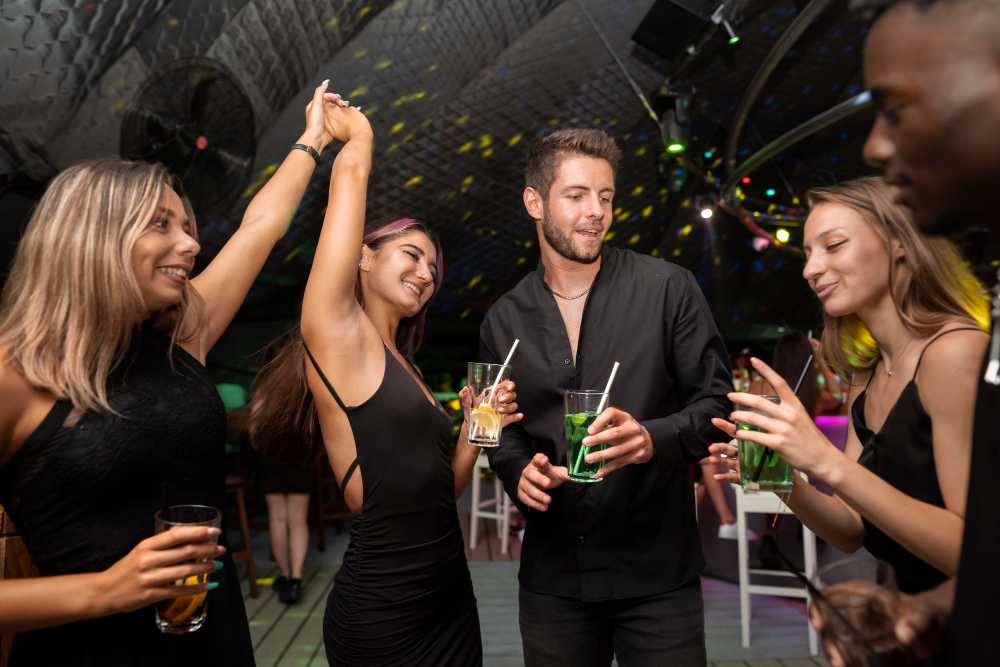
The biggest difference between a night that fades and one that compounds is what happens after the doors close. Bars that actively encourage guests to photograph their drinks, tag the venue, and share their night are turning a single evening into ongoing exposure that keeps working long after last call.
A visually distinct drink, a small interactive challenge, or simply a branded hashtag posted around the room can be enough to prompt that sharing. You’re not asking guests to do marketing for you, you’re giving them something worth posting anyway.
4. Keep the copy fresh without burning out
Drafting new promotional copy every single week for a recurring night is where a lot of bar owners quietly give up, and the posts start to feel stale as a result.
Tools like PosterMyWall’s AI Writer can help generate fresh captions and event copy in your own voice, which makes it far easier to keep a weekly night feeling new instead of recycling the exact same post every time.
5. Track what’s actually working
Once a recurring night has run for a few weeks, look at which promotional posts got the most engagement, which weeks had the strongest turnout, and whether certain specials or contests moved the needle more than others. A few specifics worth tracking week to week:
- Turnout by week, so you can spot whether attendance is trending up, flat, or fading.
- Which specific post or caption style drove the most shares or saves, since this tells you what to repeat rather than guess at.
- How much user-generated content each night produced, as a rough proxy for how much free exposure that event generated beyond your own posts.
This is where the marketing engine framing pays off, you’re not just hoping the next event does better, you’re adjusting based on what the last one actually showed you.
Frequently Asked Questions (FAQs):
1. What’s the difference between hosting an event and marketing it as an engine?
Hosting an event ends when the night does. Treating it as a marketing engine means capturing photos, tags, and shares that keep generating visibility for your bar well after the event itself has wrapped up.
2. How often should I change up my weeknight event themes?
Not as often as it might seem, repetition is what builds a habit. Most bars see stronger long-term results from consistently running the same one or two recurring nights than from constantly introducing new concepts.
3. What’s an easy way to encourage guests to share their night online?
A visually distinctive drink, a small interactive game, or a simple branded hashtag tends to prompt organic sharing without requiring guests to do anything they wouldn’t already want to do.
Ready to Turn One Slow Night Into Your Busiest?
Filling a slow weeknight isn’t about throwing a bigger event, it’s about running the same solid one consistently and letting each night generate the next one’s crowd.
Start with a dedicated event landing page for your next recurring night and let the content it generates do some of the marketing for you.